 Wordy Solver


A yellow tile in Wordle is defined as a signal that your guessed letter exists in the target word but sits in the wrong position. That single piece of feedback is the engine behind every smart repositioning decision you make. Understanding the role of yellow tiles in Wordle separates players who solve puzzles in three guesses from those who burn through all six. Wordle, published daily by The New York Times, uses a three-color feedback system: green, yellow, and gray. Each color carries a specific, deterministic meaning that you can use to cut your candidate list fast.
What is the role of yellow tiles in Wordle?
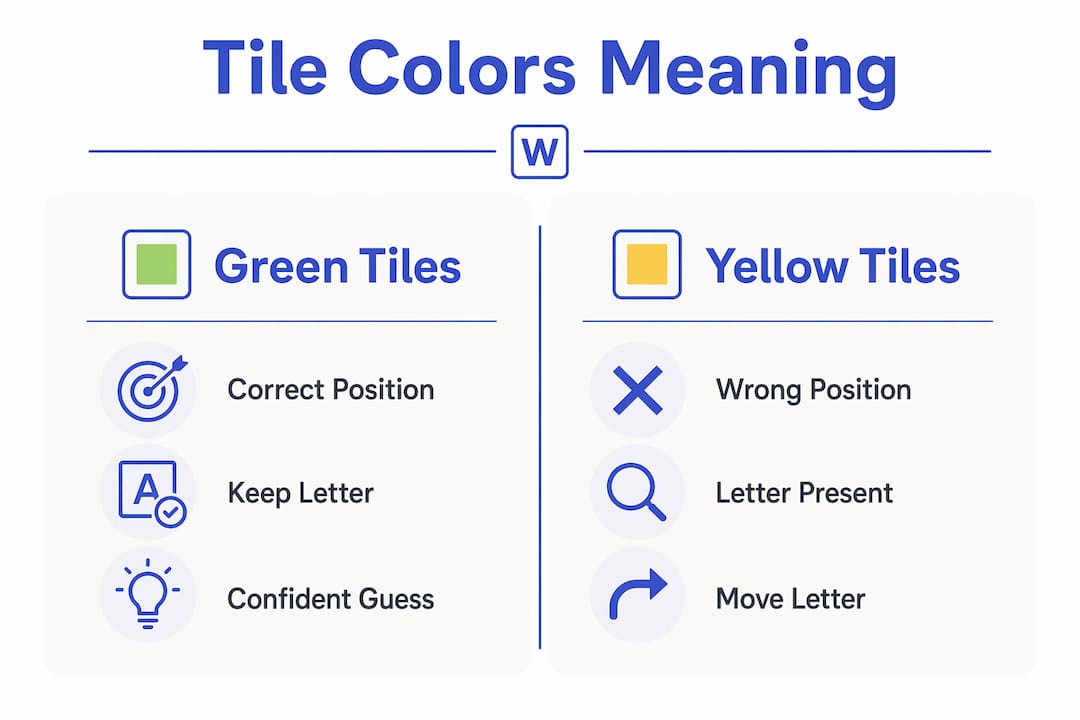
A yellow tile confirms that the letter belongs in the word but not in the slot you just tested. That is the most important distinction in the game. Green locks a letter into its exact position. Yellow tells you the letter is real but misplaced. Gray eliminates the letter entirely, or signals that you have guessed it more times than it actually appears.
Yellow tiles are vital data points in an incomplete-information game. They do not solve the puzzle for you, but they shrink the pool of possible answers with every guess. A yellow “A” in position 2 tells you the answer contains an “A” and that position 2 is ruled out for it. That is two pieces of information from one tile.
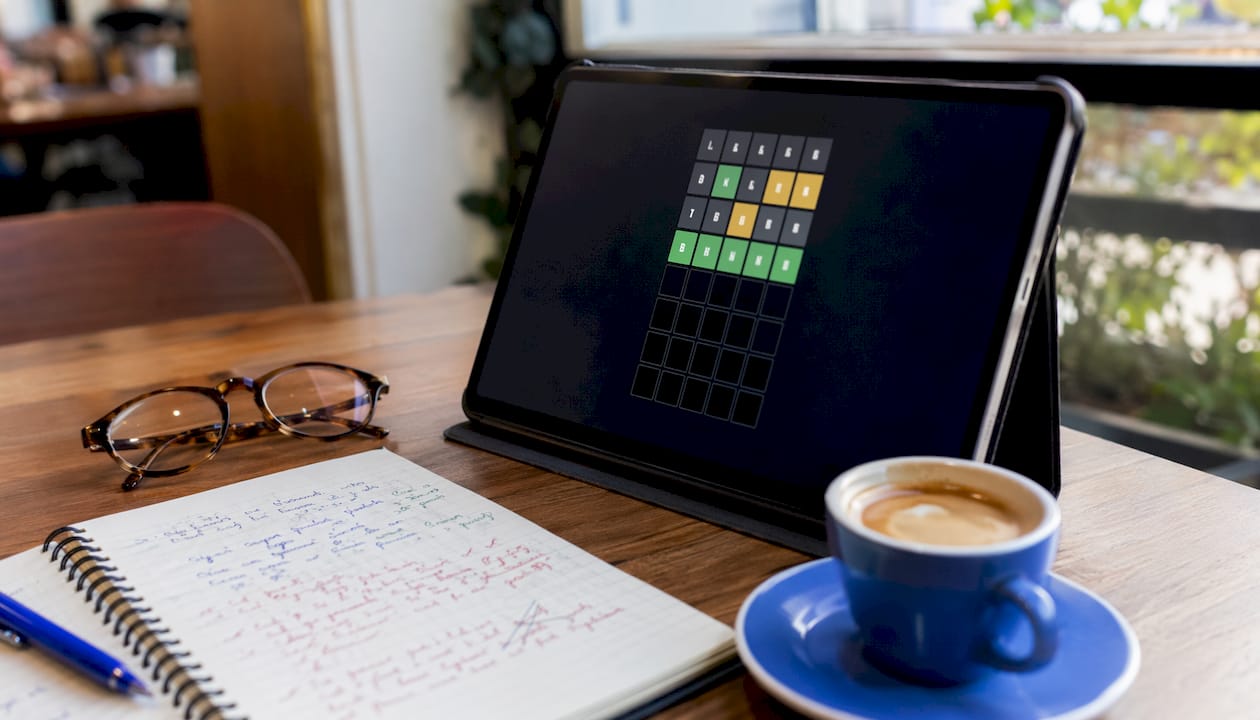
The Wordle feedback system is fully deterministic. No randomness exists. Color assignments follow strict rules based on letter placement and letter count in the solution word. That predictability is your biggest advantage.
How do yellow, green, and gray tiles differ?
Each tile color plays a distinct role in the color coding system. Green means the letter is correct and in the right position. Yellow means the letter is correct but in the wrong position. Gray means the letter does not appear in the word at that frequency.
| Color | Meaning | Strategic action |
|---|---|---|
| Green | Correct letter, correct position | Lock it in. Repeat that letter in the same slot. |
| Yellow | Correct letter, wrong position | Move it. Test that letter in a different slot next guess. |
| Gray | Letter absent or over-counted | Eliminate it. Do not use that letter again at that frequency. |
Gray tiles eliminate numerous word possibilities and complement yellow tile confirmation of letter presence. Players who ignore gray feedback lose the full benefit of the system. Reading all three colors together is how you read Wordle color patterns like a pro.
The green tiles meaning in Wordle is the most satisfying: you have nailed both the letter and the spot. But yellow tiles do more strategic work per guess because they force you to think about position, not just identity.
What mistakes do players make with yellow tiles?
The most common mistake is guessing a yellow letter in the same position again. If “E” came back yellow in position 3, placing “E” in position 3 on your next guess wastes an entire attempt. Reusing yellow tiles in the same position is a classic beginner error that costs streaks.
The second major mistake involves duplicate letters. Players often assume a word contains only one instance of a letter. If you guess “SPEED” and the first “E” comes back yellow while the second comes back gray, the word contains exactly one “E.” That gray tile is not a contradiction. It is a count signal.
Here are the most frequent yellow tile errors to avoid:
- Placing a yellow letter back in its original slot on the very next guess
- Assuming gray means the letter is completely absent when you guessed it twice
- Ignoring yellow tiles entirely and guessing random new words
- Treating yellow as “almost right” rather than as a firm positional clue
- Failing to cross-reference yellow feedback with gray eliminations
Pro Tip: Treat every yellow tile as a “move it” instruction. The letter is confirmed. Your only job now is to find its correct slot.
The third mistake is ignoring yellow tiles in favor of exploring new letters. New letters are valuable, but abandoning confirmed letters too early extends your solve time. Balance is the key.
How can you use yellow tiles to narrow down answers?
Yellow tiles reduce the candidate word pool by confirming letter presence, but logical deduction is required to reposition them effectively. Here is a practical four-step method:
- List every yellow letter and its forbidden positions. If “R” came back yellow in slot 4, write “R: not position 4.” This mental or physical list prevents repeat mistakes.
- Build your next guess around repositioning yellow letters. Place each yellow letter in a new, untested slot. If “R” was yellow in position 4, try it in positions 1, 2, 3, or 5.
- Use filler words early to test common letters. Advanced players use filler words in early guesses to identify common letters, then reposition yellow tiles in new slots to maximize information gain. Words like “CRANE” or “STALE” cover high-frequency letters fast.
- Test duplicate letter scenarios deliberately. If you suspect a letter appears twice, build a guess that places the same letter in two different positions. The tile colors will confirm or deny the count.
Treat each guess as an information-gathering operation, not just a shot at the answer. Players who think this way consistently solve puzzles in fewer attempts. The goal of guess 2 is rarely to win. It is to collect enough data to win on guess 3 or 4.
For example: you guess “CRANE” and get “R” yellow in position 2 and “E” yellow in position 5. Your next guess should place “R” somewhere other than position 2 and “E” somewhere other than position 5. A word like “GREET” tests “R” in position 3 and “E” in positions 3 and 4, while also introducing new letters “G” and “T.”
Pro Tip: Plan your second guess before you submit your first. Knowing what information you want to gather shapes which word you choose.
How do you interpret yellow tiles with duplicate letters?
Duplicate letter scenarios are where most players get confused. The Wordle color system handles letter counts deterministically, meaning if you guess a letter twice and it only appears once in the answer, one tile will be yellow or green and the other will be gray.
Here is how to read those mixed signals:
- Yellow + gray for the same letter: The word contains exactly one instance of that letter. The yellow tile shows the confirmed occurrence. The gray tile shows the extra guess was unnecessary.
- Yellow + yellow for the same letter: The word contains at least two instances of that letter. Both need repositioning.
- Green + gray for the same letter: The word contains exactly one instance. The green tile has it locked. Ignore the gray.
- Green + yellow for the same letter: The word contains at least two instances. One is placed correctly; the other needs a new slot.
Effective handling of duplicates is a frequent difference between streak-breaking sessions and successful solves. Mental tracking of letter multiplicity is the skill that separates good players from great ones.
| Scenario | What it means | Next move |
|---|---|---|
| Yellow + gray (same letter) | Exactly one instance in the word | Reposition the yellow; drop the extra |
| Yellow + yellow (same letter) | At least two instances in the word | Reposition both to new slots |
| Green + gray (same letter) | Exactly one instance, correctly placed | Keep the green; stop guessing that letter again |
| Green + yellow (same letter) | Two instances; one placed correctly | Keep the green; find a new slot for the yellow |
Tracking this mentally takes practice. Writing it down on paper during your first few weeks of focused play builds the habit faster than any other method.
Key Takeaways
Yellow tiles are the most strategically demanding feedback in Wordle because they confirm a letter’s presence while requiring you to find its correct position through deliberate repositioning.
| Point | Details |
|---|---|
| Yellow means “move it” | A yellow tile confirms the letter exists but forbids its current position in future guesses. |
| Gray complements yellow | Gray tiles eliminate letters or signal over-counting, making them as valuable as yellow feedback. |
| Duplicate letters need tracking | Mixed yellow and gray tiles for the same letter reveal exact letter counts in the solution. |
| Filler words accelerate solving | Early guesses covering common letters generate yellow feedback faster and set up efficient repositioning. |
| Treat guesses as data collection | Every guess should gather information, not just attempt a solution, to reduce total guess count. |
Why yellow tiles changed how I think about Wordle
By Mat C.
When I first started playing Wordle seriously, I treated yellow tiles as near-misses. I felt good seeing them, but I did not use them with any real discipline. I would move a yellow letter one slot over and call it a plan. That is not a plan. That is a guess dressed up as strategy.
The shift happened when I started writing down forbidden positions. Suddenly, yellow tiles became constraints I could work with rather than vague encouragement. A yellow “T” in position 3 does not just tell you “T is in the word.” It tells you T is in positions 1, 2, 4, or 5. That is four testable slots. That is a decision tree, not a coin flip.
The other thing I had to unlearn was the rush. Expert players caution against rushing after early yellow or green tiles appear. I used to see two yellows on guess 1 and immediately try to solve the whole puzzle on guess 2. That burned turns. Now I use guess 2 to gather more letters, even when I feel close. Patience is the actual skill here. Yellow tiles reward players who think one step ahead, not players who react to each guess in isolation.
— Mat C.
Wordy Solver makes yellow tile strategy click
Knowing the theory behind yellow tiles is one thing. Applying it under the pressure of a daily puzzle is another.
Wordy Solver gives you structured daily hints for Wordle, Connections, Strands, and Spelling Bee. You can use color-coded clues to work through the logic yourself, or reveal the full answer when you need it. The tool is built for players who want to get better, not just get the answer. If yellow tile repositioning still trips you up, Wordy Solver’s daily hints walk you through the reasoning step by step, so you build the skill rather than just copy the solution.
FAQ
What does a yellow tile mean in Wordle?
A yellow tile signals that the guessed letter exists in the target word but is placed in the wrong position. You must move that letter to a different slot in your next guess.
Why do I get a gray tile for a letter I already got yellow?
Wordle’s color system is deterministic and counts letter frequency. If you guess a letter twice and it only appears once in the answer, one tile shows yellow or green and the other shows gray to signal the extra occurrence.
What is the difference between yellow and green tiles in Wordle?
Green tiles confirm the correct letter in the correct position. Yellow tiles confirm the correct letter in the wrong position. Green locks; yellow redirects.
How do yellow tiles help narrow down Wordle answers?
Yellow tiles reduce the candidate word pool by confirming a letter’s presence and ruling out one specific position. Each yellow tile gives you two constraints: the letter is in the word, and it is not in that slot.
Should I always move a yellow letter on my next guess?
Yes. Placing a yellow letter in the same position again wastes a guess entirely. Repositioning yellow letters to untested slots is the core mechanic for solving Wordle efficiently.