 Wordy Solver


A themed word puzzle is a word search, crossword, or similar word game where every hidden word connects to a single unifying topic, making it faster and more satisfying to find solutions. The theme acts as a mental filter, narrowing your focus before you even start scanning. Whether you are playing a holiday word search or a food-themed crossword, the concept is the same: one topic, all the words. Themed word games have become a staple in print, classrooms, and digital apps because they combine the structure of traditional puzzles with the focus of a subject you already know. Wordy Solver covers daily themed word games like Wordle, Connections, Strands, and Spelling Bee, making this a format worth understanding deeply.
What is a themed word puzzle and why does it work so well?
A themed word puzzle organizes all its words around one central subject, such as animals, seasons, food, or sports. That single design choice changes everything about how your brain processes the puzzle. Contextual themes prime the brain to activate relevant semantic fields before you search, which means you are already thinking in the right vocabulary zone. The result is faster recognition and a more satisfying solve.
The standard industry term for this design approach is “thematic clustering,” and it shows up across crosswords, word searches, and scrambled word formats. Thematic clustering is the reason a puzzle labeled “Ocean Life” feels easier than a random word list of the same length. Your brain pre-loads words like “coral,” “tide,” and “kelp” the moment it reads the title.
“Themed word puzzles reduce random scanning by priming the brain to relevant semantic fields, improving scanning efficiency by 30–40% compared to non-themed puzzles.”
That 30–40% efficiency gain is not trivial. It means you spend less time lost in the grid and more time experiencing those satisfying “aha” moments that keep you coming back. Themes also make puzzles feel personal. A puzzle themed around your favorite movie, holiday, or hobby feels like it was built for you, which deepens engagement beyond what a generic word list can deliver.
How do themes improve player engagement and focus?
Themes sharpen your attention by giving every word a shared identity. When all the answers belong to one category, your brain stops treating each word as an isolated target and starts treating the puzzle as a connected system.

Themed puzzles provide variety without adding complexity, acting as built-in difficulty sliders. A “Winter Holidays” theme keeps the rules identical to any other word search but shifts the entire cognitive experience. Players who know the theme well move faster. Players who are learning the theme build vocabulary as they play.
Popular themes that consistently drive engagement include:
- Animals and nature: Broad enough for all ages, specific enough to feel focused.
- Food and cooking: Triggers strong sensory memory, which aids recall.
- Seasons and holidays: Time-relevant themes create urgency and shared cultural context.
- Movies, music, and pop culture: Connects puzzle play to existing fan knowledge.
- Travel and geography: Builds world knowledge while keeping play light.
Pro Tip: Pick a theme you genuinely know well when starting out. Your existing vocabulary in that subject gives you a natural head start and makes the puzzle feel rewarding rather than frustrating.
The emotional payoff of a themed puzzle is real. Solving a “Space Exploration” crossword feels like a small win for your knowledge of the subject, not just your word-finding skills. That dual reward, language skill plus subject knowledge, is what separates themed word games from generic ones.
What are the common types of themed word puzzles?
Themed word puzzles appear in several distinct formats, each with its own rules and appeal. Understanding the differences helps you choose the right format for your skill level and goals.
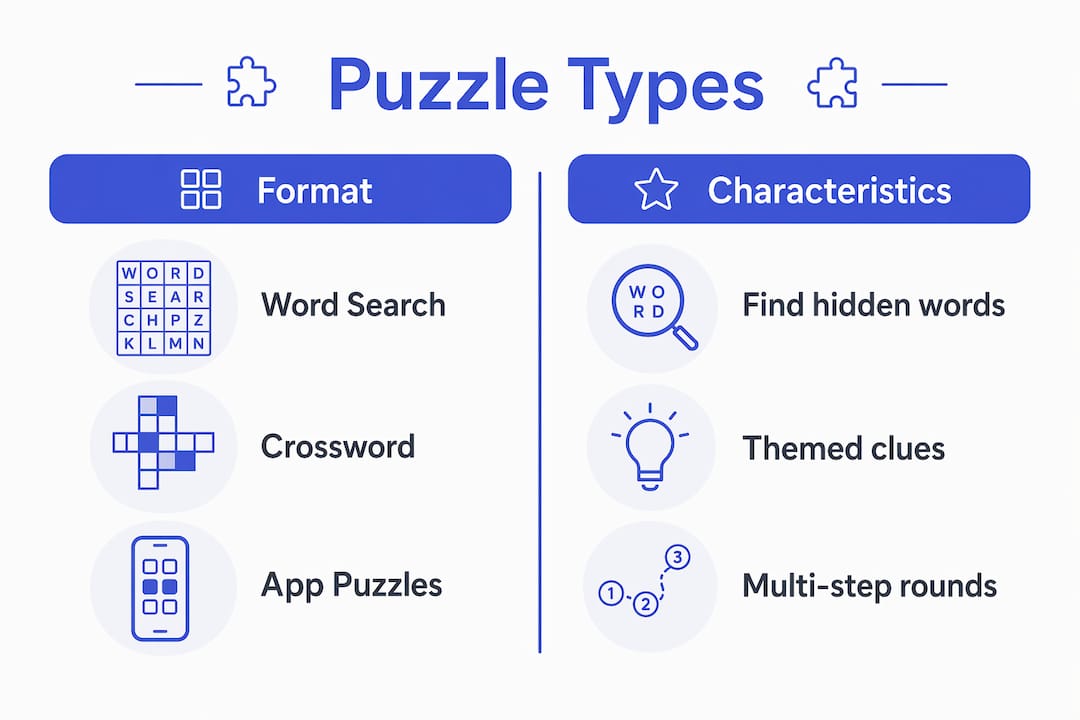
| Format | How it works | Best for |
|---|---|---|
| Themed word search | Find topic words hidden in a letter grid | Casual players, kids, parties |
| Themed crossword | Fill a numbered grid using topic-specific clues | Intermediate to advanced players |
| Scrambled word puzzle | Unscramble letters to reveal topic-related words | Vocabulary builders, language learners |
| Thematic fill-in | Place given words into a blank grid by length | Logical thinkers, pattern solvers |
| Mobile theme puzzles | Multi-level app games with unlockable rounds | Daily players, digital-first audiences |
Themed crosswords are the most widely recognized format. Every clue connects to the central theme, and skilled constructors use the theme entries as the grid’s anchor words. A crossword themed around “Classic Rock Bands” might feature BEATLES, STONES, and ZEPPELIN as its longest across entries, with every other clue supporting that world.
Modern app-based thematic puzzles take the format further with multi-step gameplay. Players complete rounds to unlock levels, typically spending 5–10 minutes per session with rewards like hints and extra lives built in. That session length is deliberate. It fits a commute or a lunch break, making daily play a realistic habit.
Printable themed puzzles serve a different purpose. Party hosts use them for baby showers, holiday gatherings, and classroom events. The theme does the decorating work. A “Tropical Beach” word search at a summer party needs no explanation. Players pick it up and immediately understand the world they are entering.
What cognitive and educational benefits do themed puzzles provide?
Themed word puzzles engage multiple brain functions at once. They combine logic, semantic memory, and cultural knowledge into a single activity, which is why cognitive psychologists treat them as more than entertainment.
Thematic scrambled word puzzles engage logic, semantic memory, and cultural thinking simultaneously, strengthening the connection between language and thought. That combination activates neural pathways that rote memorization never reaches. When you unscramble “TPOCOUS” in an ocean-themed puzzle, you are not just finding letters. You are retrieving “octopus” from a web of related concepts: tentacles, ink, deep water.
“Thematic concentration in puzzles is more effective for vocabulary retention than rote memorization, because it associates new words within meaningful, connected contexts.”
Thematic concentration improves vocabulary retention by encouraging active engagement and deeper processing. Language learners benefit especially from this effect. Encountering “sauté,” “braise,” and “blanch” together in a cooking-themed crossword builds a mental cluster around culinary vocabulary that a random word list never creates.
The benefits extend beyond vocabulary:
- Active recall: Themed puzzles force you to retrieve words, not just recognize them, which builds stronger memory.
- Classification skills: Grouping words by theme trains your brain to organize information, a skill that transfers to reading and writing.
- Verbal reasoning: Working through themed crossword hints sharpens your ability to interpret language in context.
- Focus and patience: Completing a puzzle requires sustained attention, which builds concentration over time.
Pro Tip: If you are learning a new language, choose themed crosswords in that language over flashcard apps. The contextual connections between words in a theme cluster stick far longer than isolated vocabulary drills.
Casual players benefit too, even without a learning goal. Word puzzles blend logic and creativity, challenging vocabulary and linguistic intuition while delivering satisfying moments when solutions click. That satisfaction is a genuine cognitive reward, not just fun.
How can you solve and create themed word puzzles effectively?
Solving themed puzzles well requires a shift in strategy. Most players start by scanning for familiar words, which works fine until you hit a stalemate.
Experienced solvers avoid literal interpretations and instead look for wordplay, alternate meanings, and semantic connections. A clue reading “Pitcher’s asset” in a baseball-themed crossword could mean ARM, not a water jug. The theme tells you the world you are in. Use it.
A practical solving approach:
- Read the theme title first. Activate your mental vocabulary for that subject before touching the grid.
- Fill in the longest entries first. Theme anchor words are usually the longest answers and give you crossing letters to work with.
- Test prefixes and suffixes. If you know the theme is “Space,” words ending in “-TION” (EXPLORATION, NAVIGATION) are strong candidates.
- Look for wordplay in clues. Question marks in crossword clues signal a pun or double meaning. Never skip them.
- Work the crosses. Every letter you confirm from one answer narrows the options for intersecting words.
Creating your own themed puzzle is equally rewarding. When building a themed word search, avoid punctuation, hyphens, and spaces in your word list to keep the grid consistent. Convert “ICE CREAM” to “ICECREAM” so it fits cleanly in the grid without confusing solvers.
For parties and mixed-age groups, offer two difficulty versions of the same theme. An easy version with 10–12 short words works for younger players. A medium version with 14–20 longer words challenges adults. Same theme, same fun, different challenge levels.
Pro Tip: When creating a themed crossword, build your theme entries first and fill the rest of the grid around them. Starting with the theme words locks in your best material and prevents you from painting yourself into a corner.
Key Takeaways
Themed word puzzles improve both enjoyment and cognitive performance because the unifying topic primes your brain before you start, making every solve faster and more rewarding.
| Point | Details |
|---|---|
| Core definition | A themed word puzzle organizes all words around one topic, using thematic clustering to focus the solver’s attention. |
| Efficiency gain | Themes improve scanning efficiency by 30–40% by activating relevant vocabulary before play begins. |
| Cognitive benefits | Themed puzzles strengthen semantic memory, active recall, classification skills, and verbal reasoning simultaneously. |
| Solving strategy | Read the theme title first, fill anchor entries early, and look for wordplay rather than relying on literal clues. |
| Creating puzzles | Remove spaces and punctuation from word lists, and offer two difficulty versions to keep mixed-age groups engaged. |
Why themed puzzles are the most underrated format in word games
I have played word puzzles in nearly every format available, and themed puzzles consistently deliver something the others do not: a sense of place. When you sit down with a “Jazz Age” crossword or a “Rainforest” word search, you are not just hunting letters. You are spending time inside a subject you care about.
What surprises most players is how much the theme does the cognitive heavy lifting for you. You walk in already knowing the vocabulary. The puzzle just asks you to prove it. That dynamic flips the usual frustration of word games. Instead of feeling stuck, you feel like you are being tested on something you actually know.
The trend toward daily digital themed puzzles, like Connections and Strands, confirms what puzzle designers have known for decades. Themes create loyalty. Players return daily not just for the challenge but because each new theme is a fresh invitation to a world they enjoy. The social dimension matters too. Sharing your score on a food-themed puzzle feels different from sharing a generic word score. The theme gives you something to talk about.
My honest observation after years of playing: the players who improve fastest are the ones who treat the theme as a tool, not just a label. They use it to predict words, eliminate options, and build momentum. That is the skill that separates a good solver from a great one.
— Mat C.
Wordy Solver has daily themed puzzles ready for you
Themed word puzzles are most rewarding when you play them every day, and that is exactly what Wordy Solver is built for.
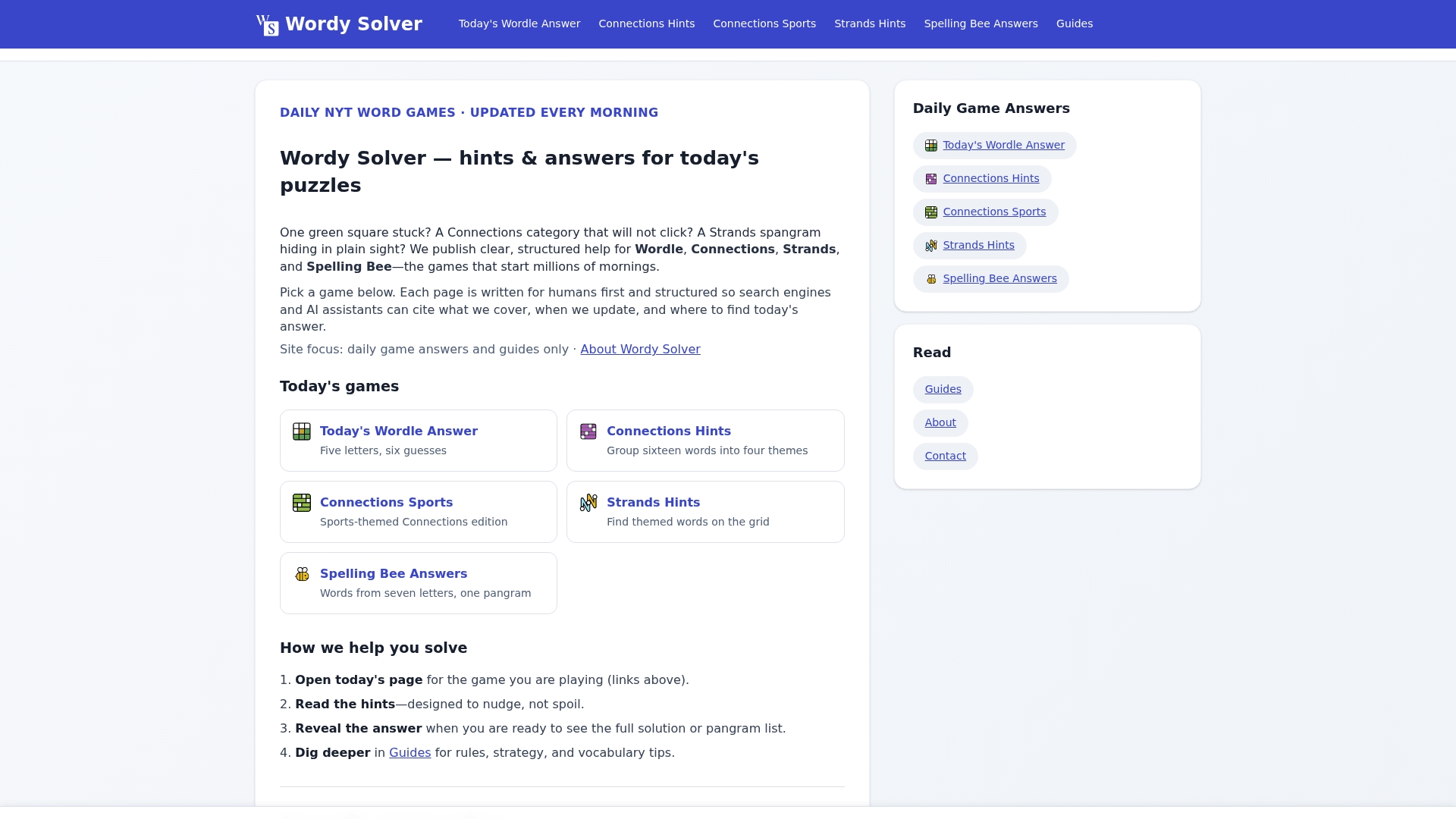
Wordy Solver covers daily themed word games including Wordle, Connections, Strands, and Spelling Bee, with structured hints that let you choose how much help you get. Need a nudge without a spoiler? The hint system has you covered. Ready for the full answer? That is one click away. Whether you are sharpening your solving skills or just looking for a satisfying daily challenge, visit Wordy Solver to find today’s themed puzzle hints and answers waiting for you.
FAQ
What is a themed word puzzle?
A themed word puzzle is a word game where every word or answer connects to a single unifying topic, such as animals, food, or holidays. The theme primes your brain’s relevant vocabulary before you start, making the puzzle faster and more enjoyable to solve.
How do themed word puzzles differ from regular word puzzles?
Regular word puzzles use random or unrelated word lists, while themed puzzles organize all words around one subject. That shared context improves scanning efficiency and makes the solving experience feel more cohesive and rewarding.
What are the most popular themes for word puzzles?
Animals, food, seasons, holidays, sports, and pop culture rank among the most popular themes. These subjects draw on vocabulary most players already know, which lowers the barrier to entry while keeping the challenge engaging.
Do themed word puzzles have real cognitive benefits?
Yes. Thematic puzzles strengthen semantic memory, active recall, and verbal reasoning. Research shows thematic concentration outperforms rote memorization for vocabulary retention because words are learned within meaningful, connected contexts.
How do I get better at solving themed crossword hints?
Read the theme title before touching the grid, fill in the longest theme entries first, and look for wordplay in clues rather than relying on literal meanings. Testing prefixes and suffixes within the theme’s vocabulary also unlocks answers that a direct reading would miss.