 Wordy Solver


Wordle hard mode is defined as a gameplay setting that forces every subsequent guess to include all previously revealed green and yellow letters in their correct constraints. This single rule transforms Wordle from a letter-testing exercise into a pure deduction challenge. An analysis of 730 million games by The New York Times found that hard mode can actually be easier than normal mode because the constraints keep players focused. The best wordle hard mode hints are not about luck. They are about understanding the rules deeply and building a repeatable system that works under pressure.
What are the best Wordle hard mode hints?
The single most effective hint for hard mode is this: treat every guess as a deduction step, not a letter test. Hard mode disables random elimination words, so you cannot throw in a word like JUMPY just to check new letters. Every guess must carry weight.
Start with CRANE or SLATE. These two words cover five of the most common letters in the English language: C, R, A, N, E and S, L, A, T, E. Opening words like CRANE or SLATE remain the strongest first guesses in hard mode because they surface multiple clues at once. More clues on guess one means fewer dead ends on guess three.
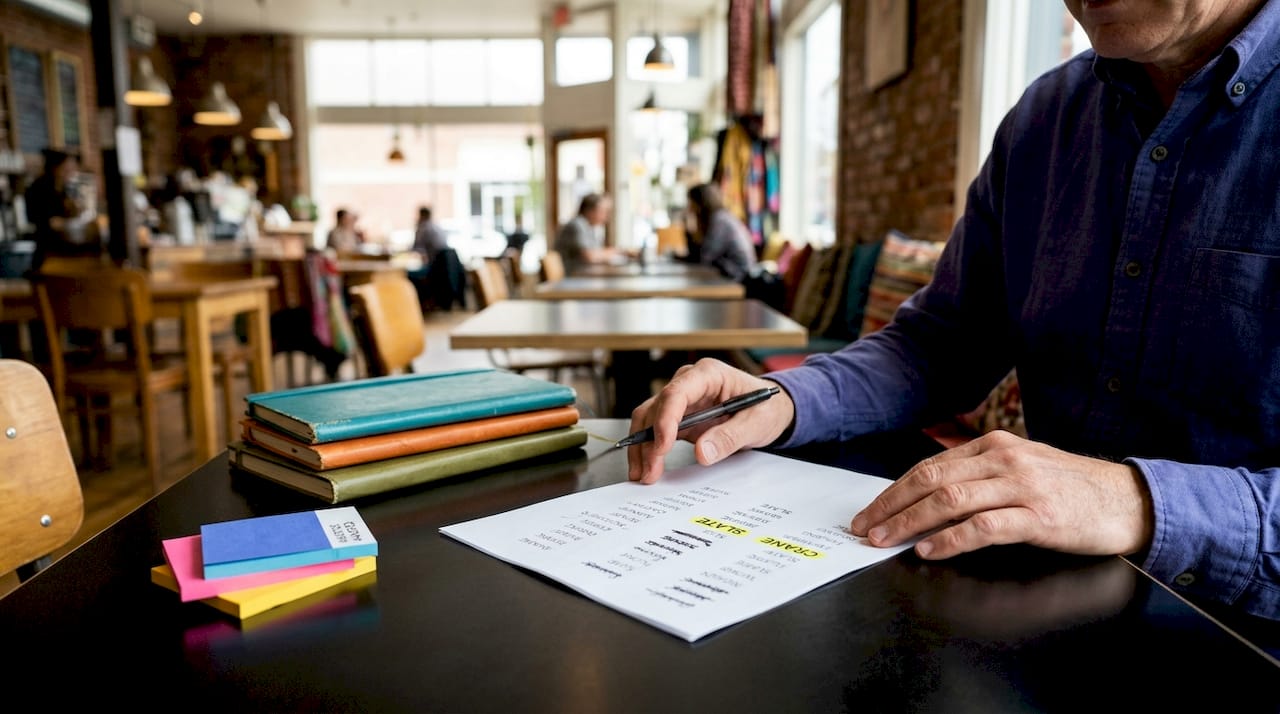
Your second guess is the most critical move in the entire game. Use it to build directly on what guess one revealed while testing common consonants like N, L, R, S, and T. If CRANE gives you a green A and a yellow R, your second guess must contain both. A word like TRAIL or RADAR fits that constraint and keeps new consonants in play.
By guess four, the board narrows fast. Guess 4 is a make-or-break moment where you should commit to your strongest theory rather than playing it safe. Hesitation at this stage wastes a guess you cannot afford to lose.
How do you enable Wordle hard mode?
Activating hard mode takes less than 30 seconds, but timing matters. Follow these steps exactly:
- Open Wordle on The New York Times website at nytimes.com/games/wordle.
- Tap or click the gear icon in the top right corner of the screen to open Settings.
- Find the “Hard Mode” toggle and switch it on.
- Toggle Hard Mode before your first guess. The setting locks once you start a puzzle.
- Confirm the toggle is active. The screen will show a confirmation message.
- Begin your puzzle. Hard mode is now enforced for the full game.
The inability to switch modes mid-game is a feature, not a flaw. It prevents players from bailing out when a puzzle gets tough. Hard mode works on any device, including desktop browsers, mobile browsers, and the NYT Games app on iOS and Android. The setting resets each day, so you need to verify it is on before your first guess every session.
Pro Tip: Set a habit of checking the gear icon before typing your opening word. One second of confirmation saves six guesses of frustration.
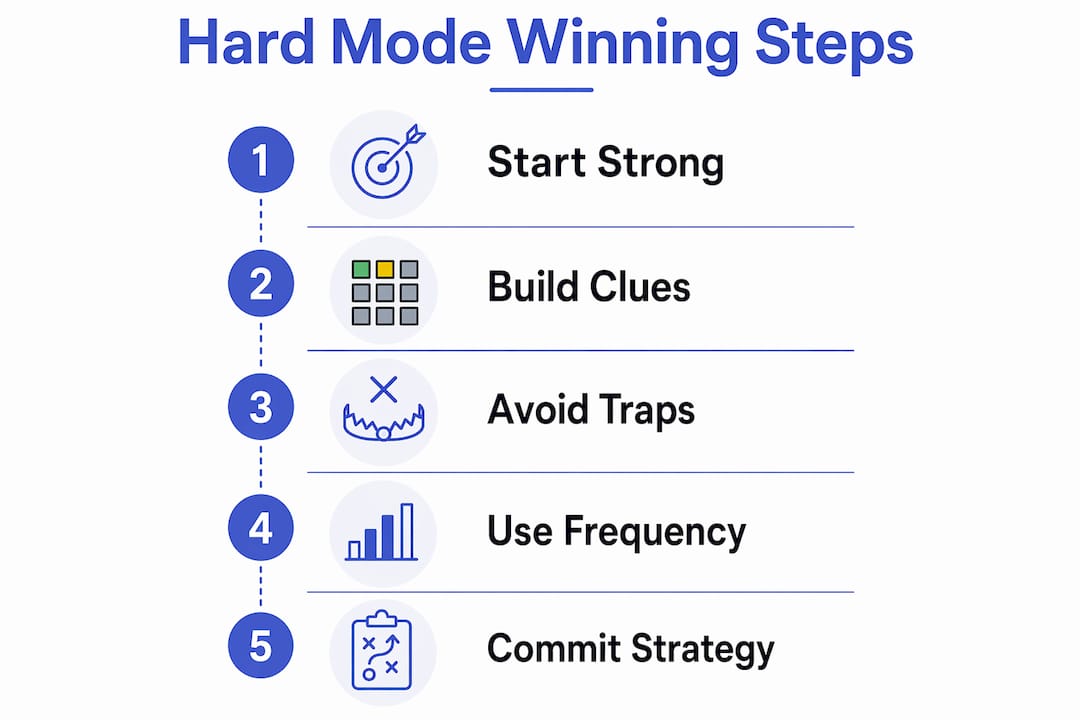
What are the core rules unique to hard mode?
Hard mode enforces three strict constraints that do not exist in normal mode. Understanding each one prevents the most common mistakes players make.
- Green letters lock in position. If the letter A appears green in position 3 on guess one, every future guess must place A in position 3. No exceptions.
- Yellow letters must appear somewhere. If R turns yellow on guess one, every future guess must include R somewhere in the word. You cannot ignore it.
- No throwaway diagnostic words. Hard Mode rules are strictly enforced from the second guess onward, which means words that ignore known clues are rejected by the game before you can submit them.
- Letter position testing is restricted. You cannot freely move a yellow letter to every position across multiple guesses without also satisfying all other active constraints.
- Elimination guessing is gone. The tactic of guessing a word with five completely new letters to rule them out is blocked entirely.
These rules force you to think ahead. Each guess must satisfy all active constraints while still moving you closer to the answer. That combination of restriction and progress is what makes hard mode genuinely harder than it sounds on paper.
Top strategies for playing hard mode effectively
Choose your opener with purpose
CRANE and SLATE are not just popular. They are mathematically strong because they hit the highest-frequency letters across the Wordle answer list. CRANE covers C, R, A, N, E. SLATE covers S, L, A, T, E. Either word gives you a strong signal on the first guess. Pick one and stick with it as your permanent opener so your brain can focus on interpreting results rather than choosing a starting word each day.
Build your second guess around the clues
Your second guess should do two things at once: satisfy all constraints from guess one and introduce at least two new high-frequency consonants. Second guess strategy focusing on common consonants like N, L, R, S, and T helps you avoid running out of useful information by guess four. A weak second guess that only satisfies constraints without testing new letters leaves you guessing blind later.
Recognize and escape trap patterns
Trap patterns are word families where one ending fits many possible answers. The pattern “ATCH” is the classic example. Patterns like BATCH, CATCH, HATCH and MATCH all share the same four letters, leaving only the first letter variable. In normal mode, you could guess a word with B, C, H, M, and W to eliminate four options at once. In hard mode, you cannot. You must guess actual words that fit the constraint, burning one guess per option.
The escape strategy is to prioritize the most common first letter in that family. For the ATCH trap, CATCH and MATCH are statistically more common Wordle answers than HATCH or BATCH. Guess the most likely option first and commit.
| Trap Pattern | Possible Words | Best First Guess |
|---|---|---|
| _ATCH | BATCH, CATCH, HATCH, MATCH, WATCH | CATCH or MATCH |
| _IGHT | FIGHT, LIGHT, MIGHT, NIGHT, RIGHT | LIGHT or NIGHT |
| _OUND | BOUND, FOUND, HOUND, MOUND, ROUND | ROUND or FOUND |
| _OWER | BOWER, LOWER, MOWER, POWER, TOWER | POWER or TOWER |
Use frequency-based elimination at every step
Hard Mode rewards strategic thinking over random guessing. When two or more words fit your current constraints, choose the one that contains the most common letters in the remaining positions. For example, if your constraints point to a word ending in “ORE,” the letter P is more common in that slot than B or G. PORE beats BORE as your next guess because it tests a higher-frequency option first.
Pro Tip: When you are stuck between two equally valid words, pick the one with more common letters in unchecked positions. This gives you the best chance of a green hit that breaks the tie.
Common challenges and how to recover in hard mode
The most dangerous situation in hard mode is the trap spiral. This happens when you have four letters confirmed but the fifth letter has five or more valid options, and you only have two guesses left. Players forced to use revealed letters in every guess develop stronger deduction skills over time, but the trap spiral can still catch experienced players off guard.
The mental approach matters as much as the letter strategy. Stay calm and methodical. When you feel the board closing in, write out or mentally list every word that fits your current constraints. Then rank them by how common the answer feels. Wordle tends to use familiar, everyday words rather than obscure vocabulary.
When the constraints feel suffocating, that pressure is actually the game working as designed. Hard mode does not punish you for being unlucky. It punishes you for guessing without a plan. The moment you start treating each guess as a logical step rather than a shot in the dark, the board opens up.
If you are new to hard mode and find yourself failing repeatedly, turning the setting off temporarily is a valid choice. Hard mode is a skill that builds over weeks, not days. Return to it after you have strengthened your pattern recognition in normal mode. Hard mode does not affect your streaks differently from normal mode. Wins and losses count the same either way, so there is no statistical penalty for switching.
Key Takeaways
Mastering Wordle hard mode requires a strong opener, a purposeful second guess, and a clear plan for navigating trap patterns before guess four forces your hand.
| Point | Details |
|---|---|
| Hard mode definition | Every guess must include all previously revealed green and yellow letters in their correct constraints. |
| Best opening words | CRANE and SLATE cover the highest-frequency letters and give the strongest first-guess signals. |
| Second guess priority | Build on guess-one clues while testing common consonants N, L, R, S, and T to stay informed. |
| Trap pattern escape | Identify word families like ATCH or IGHT early and guess the most statistically common option first. |
| Guess 4 commitment | By the fourth guess, commit to your strongest theory. Hesitation at this stage wastes critical guesses. |
Why hard mode made me a better player
I resisted hard mode for months. My logic was simple: why make something harder when the normal version is already a daily mental workout? Then I tried it for two weeks straight, and something unexpected happened. My normal-mode solve rate went up.
Hard mode forces a discipline that normal mode lets you skip. When you cannot throw in a random word to test five new letters, you have to actually think about what the board is telling you. That habit of reading the board carefully carries over. Now I see patterns in normal mode that I used to miss entirely.
The constraint that trips most players up is the yellow letter rule. You know the letter belongs somewhere, but you keep placing it in positions that feel convenient rather than positions that make logical sense. Hard mode trains you to think about letter placement as a deduction problem, not a guessing game.
My honest advice: give hard mode 10 consecutive days before judging it. The first three days feel punishing. By day seven, the constraints start to feel like guardrails rather than walls. By day ten, you will wonder why you ever played without them. The vocabulary growth alone is worth it. You start noticing word patterns you never paid attention to before, and that awareness pays off every single day.
Wordy Solver has your daily hard mode support
Stuck on today’s puzzle and not sure which direction to take your next guess? Wordy Solver gives you structured, spoiler-free hints for daily Wordle puzzles so you can stay in the game without giving up the satisfaction of solving it yourself.
Wordy Solver is built for players who want a nudge in the right direction, not a full answer handed to them. You choose how much help you get. Start with a category hint, move to letter clues, or go straight to the full answer when you need it. For hard mode players especially, having a reliable daily Wordle hint on standby means you never have to break your streak over a single tough puzzle. Wordy Solver also covers Connections, Strands, and Spelling Bee, so your entire daily word game routine has backup.
FAQ
What does hard mode mean in Wordle?
Hard mode means every guess must use all previously revealed green and yellow letters in their correct constraints. You cannot ignore known clues or use throwaway words to test new letters.
Can you switch to hard mode after starting a puzzle?
No. Hard Mode must be enabled before your first guess and cannot be toggled mid-game. Set it in the gear icon settings before you begin.
What is the best starting word for Wordle hard mode?
CRANE and SLATE are the strongest openers because they cover the highest-frequency letters in the Wordle answer list. Either word gives you the most useful clues on guess one.
Does hard mode affect your Wordle streak?
No. Wins and losses count identically in both hard mode and normal mode. Your streak and statistics remain consistent regardless of which setting you use.
How do you avoid running out of guesses in hard mode?
Recognize trap patterns like ATCH or IGHT early and guess the most common word in that family first. Commit to a clear theory by guess four rather than testing one letter at a time.